Showing posts with label books. Show all posts

2016-05-03

Please Don't Tell...

I'm a sucker for superhero books.  Not, like, DC or Marvel, mind, but the kind of weird superhero book of oddball characters.  Like, say, girls who animate plushies, or a supervillain who can't get it right, or even the considerably darker Soon I Will Be Invincible.  Hell, the pulp noir of Larry Correia's Grimnoir Chronicles scratches the same itch.

I've found that books like these are wellsprings of creativity.  In Velveteen, McGuire was able to explore the idea of what would happen to society if super powers existed (and the political ramifications thereof) while having fun creating ridiculous power sets.  Bernheimer's D-List series is a little less serious and has more fun with power sets, but it still deals with how the government would react, especially in the third book.  Grossman's Invincible was far more cynical in its dissection of the superheroing world.  Regardless, I love all these books for different reasons and in different ways.  Needless to say, when Curiosity Quills sent me a notification that Please Don't Tell My Parents I'm a Super Villain was available for free on Kindle, I all but tripped over myself making sure I snagged a copy.

And then I bought and read Please Don't Tell My Parents I Blew Up The Moon and Please Don't Tell My Parents I Have Henchmen.  Yes, I can be a little obsessed with this weird little genre.


2015-10-26

Cal's Back

A little over a year ago, I wrote a short review for a pair of novels, Confessions of a D-List Superhero and Origins of a etc.  Towards the end of that review, I mentioned that I had seen that the author, Jim Bernheimer, was planning a third book.  At the time, I said,

"I'm not entirely sure where he's going to go from here.  He can't really do another prequel unless he plans to spend a couple hundred pages on Cal's college days, and the story was pretty much wrapped up at the end of Confessions."

Well, now we know why Jim's a published author and I'm just a goof with a dopey theme and a Blogger account.

What I'm trying to say is, this book impressed me.


2015-10-25

Pulp Pile: Nick Carter #216

So, while on vacation, we went to 2nd and Charles, a pretty neat used book store.  A rather huge used book store, in fact.  While there, I wandered the isles, looking at spines, hunting for some good old fashioned pulp.  One of the ones I found was a series of Nick Carter books.  The one I decided to grab was today's subject, Nick Carter Killmaster #216: Terror Times Two.

Just look at that cover!  It just screams pulp, doesn't it?  We have Nick Carter in a nice Archer-esque tactical turtleneck, a brunette babe with a gun (who doesn't really appear in the book, she seems an amalgam of two characters), and a tank crashing over either waves or some snow, which really doesn't appear anywhere in the novel.  Seriously.  There's no tanks in this book.

This is some glorious spy-pulp here.


2015-08-24

The End Is... Well, You Know How This Goes


So this was a neat concept.  Three collections of short stories, the first collection set to the lead-up to the apocalypse (whatever form it may take), the second collection being stories during the apocalypse, and then the third collection being after the apocalypse.  And, on top of it all, a good number of the authors wrote three stories, giving us a few linked trilogies within the triptych.  All in all, it worked out very well.

2015-04-16

The Hugo Mess

So, the other day, Marko Kloos and Anne Bellett declined their Hugo award nominations. This is bad enough on the surface, but I think it also demonstrates something a little bigger, and represents a need for Kate Paulk to reconsider Sad Puppies 4, and indeed, the entire Evil League of Evil should take a moment to think long and hard about what they want to accomplish with Sad Puppies and where they want to go from here.

Now you, dear reader, are probably a normal person; a sane person. I can only assume that the above made little sense to you, so I'm going to go ahead and give some background information about what's going on here. Now, I'll come right out and say that, at the very least, I'm amused by the Sad Puppies hullaballo, if not outright supportive of it. Or at least I was. Anyway, with all that in mind, I'm going to try to be objective here. There's already been more than enough hyperbole and misrepresentation as is (looking at you, EW).

2015-01-23

Yesterday's Kin

I've been a fan of Nancy Kress ever since I first read Beggar's In Spain a couple years ago.  Since then, I've slowly worked my way through much of her back catalog, which can be a bit of a pain, since much of what she's done is either A) short stories or B) not available on my Nook.

That being said, I've read a fair amount of her output, and I can honestly say that I'm quite the fan.  For those curious about where she falls on the Mohs Scale of Sci-Fi hardness, I would place her right around the 4.5 level ("One Big Fib"), but she seems to meander between 4 and 5, which is pretty crunchy, to be perfectly honest, and about as "hard" as I think I could handle for casual reading.  For instance, Crossfire and Crucible have near-C travel, but the time dilation effects are actually major plot points, so while she's using high speed travel between stars, she's taking the science into account.  She also (generally) places her stories on Earth in the nearish future; there's no blasters, but plenty of genetic engineering, oftentimes at the hands of Highly Advanced Aliens.

So, for once, I've read a current novel.  Yesterday's Kin was published by Tachyon Publications, which, until today, I'd never even heard of.  But who cares about the publisher?  Let's talk about the book!

2014-12-07

Just Another Gig

I've mentioned before my love of "blue collar dudes in space".  Temporary Duty falls into a fraternal-twin genre, "military grunts in space".  As you can tell by the cover, this is not a glamorous duty.  And I love it.

A little backstory is required here, I think.  I found out about this book because I follow the blog of the person who did the cover image.  Ric Locke self published the novel and was working on a sequel while he was in the process of dying of lung cancer.  Part of the money from the novel went towards getting him oxygen tanks and such.  I gladly bought a copy and then sat on the book for awhile (as I'm wont to do, apparently).  By the time I got around to reading the book, I found out that Locke had already died.  It was a weird experience, and I mentioned it on Facebook at the time.  Anyway, all that aside, the book is well worth tracking down on the eReader of your choice.

2014-12-02

Would You Like a Haunting With That?

Not to be confused with the movies House on Haunted Hill (1959) or House on Haunted Hill (1999).  However, if you want to watch a film version, there is The Haunting (1963) and The Haunting (1999).  Now we just need someone to make a movie called House Haunting Hill and we'll never know what the hell is going on.

My first exposure to this story was, sadly, the 1999 version of the Haunting.  It has about as much in common with the original story as the House on Haunted Hill does; which is to say that both involve a) people and b) a haunted house.  So, my short review of 1999's the Haunting is: don't bother.  That being said, the 1959 House on Haunted Hill is a perfectly serviceable haunted house picture; I'd recommend it.

But enough yammering about confusingly named properties that are all to similar to each other in title if not in content.  We're here to talk about Shirley Jackson's book!  Briefly?  It's fantastic.

2014-11-16

Back to the Night Land

Right, so, finally got around to this one.

This is actually a collection of four separate but interconnected stories written because Mr. Wright loved The Night Land.  The author's introduction is, in fact, a loving tribute to the original work, and shows that Hodgson's original had a tremendous impact on a young John C. Wright.  I, on the other hand, wasn't nearly so smitten.  That being said, I think Wright's foray into this world is considerably more accessible.  If nothing else, 21st century aping of 19th century aping of 18th century writing is enough removed that it's actually more readable.

Also, as an aside before I get into the book itself, I just have to say that I really love the cover Castalia House commissioned for this book.  From the look of the Last Redoubt, to the ghostly glow of the Earth Current at the base, to the ghostly Watchers in the background.  Cover artist Jartstar did an amazing job.  I've actually found myself just sort of staring at it.  Ahem, anyway.

2014-09-20

Say the Title Like the Commodores

Book four.  The book that caught me off guard.  I got all the way to the end of book three before finding out that, Nope!, it wasn't going to be a trilogy after all.  We're looking at five or six books here.

The Widow's House is the latest book in Daniel Abraham's Dagger & Coin series.  In many ways, this series is what I wish A Song of Fire and Ice was.  They're both sprawling epic fantasy, they're both in worlds that were in decline, they're both war-torn settings, they're both told through a series of point-of-view characters, they're both (mostly) low-fantasy -- as opposed to Tolkien-like or D&D-like high fantasy.  These similarities aren't too surprising, considering the connections between the two authors.  It's just that I like Abraham's world so much better, I like his writing style better, and I like that fact that he seems to have an end-game in mind; not just in mind, but in sight.

This world is very well designed and complicated.  Complicated enough that I needed to make a cheat sheet for myself, but unlike SoFaI, it's not from a jillion characters with eight different names, it's the fact that he's not quite as low-fantasy, so he has multiple races.  He has his orc-alikes, his wolf-people, his elves, his dwarves (sort of), so on and so forth.  However, since there's thirteen or fourteen different races, it can be a bit of a blur.  Thankfully, every book has an appendix at the end listing all the races and describing them; as an extra bonus, it's written by a highly biased in-world scholar, which makes it a little amusing.

2014-09-10

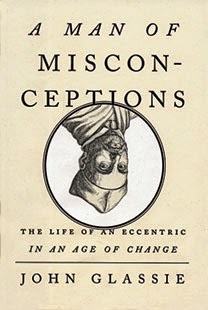
Knowing Everything and Nothing

You may or may not have heard of Athanasius Kircher, but his impact has certainly been felt in the world.  He was a 17th century Jesuit priest, polymath, scholar, prodigious author, and general source of knowledge and wisdom across the world.

And he was, by most accounts, wrong about just about everything.

Of course, being wrong about just about everything in the mid 1600s wasn't terribly uncommon.  Everyone "knew" plenty of things, but those things turned out to be quite wrong.  But yet, despite it all, Kircher laid more foundations than he ever could have imagined, and many of those foundations were responsible for new discoveries, or expanded knowledge.  In a way, it's almost unbelievable how he could be so wrong, yet be responsible (even indirectly) for people discovering the truth.  To say nothing of the numerous things that he was so close on, but still short the mark.


2014-09-02

A Brush With Perfection

Rarely, rarely does a person get to sample perfection.  Because I have a tendency to ramble, I want to make that perfectly clear right up front: We Have Always Lived In The Castle is possibly one of the most perfect pieces of fiction I have ever read.  It is pure brilliance, and the fact that many people have probably never heard of it is nothing short of criminal.  No, this isn't hyperbole.

Castle is written by the brilliant Shirley Jackson.  You know Shirley Jackson.  Everyone does.  Even if you don't recognize her name, you know her.  All it takes is two words: The Lottery.  Yes.  That Shirley Jackson.

As for Castle (billed as a novel, but really more like of novella), well... imagine a haunted house with no hauntings.  A ghost story with no ghost.  If I had to pin it down, I'd call it the epitome of the weird tale, even though there's nothing supernatural going on.  But despite having no hauntings or ghosts or cosmic horror, this story piles on the dread and foreboding in a way few things I've ever read have managed.  In many ways, it's like watching two trains steaming towards each other in slow motion.  You know what's going to happen, but you just can't tear your eyes away.  And as the trains get closer, time slows more and more to just build upon that dread.  This isn't a horror story; it's a tale of dread and unease, and it's all the more horrifying for it.  It's like Thomas Ligotti in the real world, and the real world is terrifying enough as is.

2014-08-31

What's a Cibola?

This book shouldn't exist.  There's no real reason for it, and I'm kind of annoyed by its very existence.  Cibola Burn is the fourth book of the Expanse Trilogy.  Yes, book four of three.

The Expanse Series was finished.  They'd completed the story and it was done.  And yet, here we are with another book in the series, and two further in the wings; thanks, Orbit.  And, of course, I bought it and read it because I'm an idiot who likes to encourage authors to stretch series beyond their completion.

Anyway, the nuts and bolts: the Expanse Series is the sci-fi series by James SA Corey.  Which is to say, the series written by Daniel Abraham and Ty Franck.  It's set in a futuristic world where the earth has partially colonized Mars, the larger asteroids, and a few outer moons.  It's some pretty crunchy sci-fi, so there's no laser blasters or teleporters.  In fact, the books even deal with things like acceleration, water consumption, air consumption, and other mundane issues.

While the books shift focus (using Point of View characters), the main focus of the series is the four person crew of the Rocinante a "salvaged" Martian warship.  While we also focus on other characters, the central character in the books is James Holden, the captain of the Rocinante.

The other main plotline running through the books, the main motivator for the events of all the books, is something called the "protomolecule", which is a biological organism from an ancient, ancient race of beings that were long dead before life crawled out of the muck on Earth.  While this ancient, unnamed, race has been dead for billions of years, there are hints that they may actually be the source of all intelligent life in the universe.  Or at least the ultimate source of life that led to humans, and these books don't have other intelligent life.  And, of course, because you can't have an ancient progenitor without an even older enemy, there's some kind of... adversary out there that was responsible for the death of the progenitor species.  All of this is naturally shrouded in mystery and uncertainty, because you can't just spell it out for your readers; gotta keep the mystery.

2014-08-27

Yet More Zombies

I'll be honest here.  I really didn't intend to A) do more zombies or B) turn this into the Seanan McGuire Power Hour, but sometimes it just works out that way.  So, here we go.  More zombies and more McGuire.

The Newsflesh Trilogy is written by "Mira Grant" which is McGuire's pseudonym.  Dunno why she's using one here, but that's hardly important.  The trilogy is set in 2041 or so, following a massive zombie uprising in 2014.  So let's take a look at how these particular zombies work.

It's actually pretty clever.  The zombification was caused by two engineered viruses meeting, merging, and mutating.  The irony of it being that one was a cure for cancer (it worked) and the other was a cure for the common cold (it worked).  However, when the two combined, it caused any mammal over roughly 40 pounds to get up after it had died and start munching brains.  There's more specifics, but that's the gist of it.

Like with the Velveteen series, she takes her core concept and then expands out on how it effects the world at large.  Frankly, this world building is probably the most interesting thing about these books, largely because she's really taken the time to build a plausible world (once you accept the whole zombie thing).  For instance, in a world where everyone is immune to every form of cancer, smoking is extremely common.  Like, 1950s common.  Also, blood tests to check for "amplification" (meaning you're turning into a zombie due to exposure) are so common that most any outside door has a built in panel, some vehicles have testers on the handles, and people carry numerous disposable testing kits.  And biohazard bags for disposal.  In this world, it seems like the average person has upwards of a dozen blood tests a day, unless they never leave their home.

2014-08-13

One (Well, Two) More Superhero Book(s)

Yes, I seem to be on a bit of a superhero kick, and yes, these are actual titles: Velveteen vs. The Junior Super Patriots and Velveteen vs. The Multiverse.  I suppose it's only fitting that a superhero book have a hyperventilating title.

These books, by Seanan McGuire, are another exploration of superheroes and superhero tropes in a modern, real (for varying definitions of real) world.  Like many books in this genre (D-List Supervillain to a lesser extent; Soon I Will Be Invincible to a much greater extent), it is a deconstruction of superheroes and a tongue-in-cheek look at what a world would actually be like if superhumans were common and people fell through rips in the space-time continuum on a regular enough basis for there to be scientists who spend their entire careers studying such things.

2014-08-10

Zombies. Why Did It Have to Be Zombies?

It's a book by John Ringo.  I could probably just end the review here.  But I won't.

Islands of Rage & Hope is the third book in the "Black Tide Rising" trilogy series.  Not to be confused with Dark Waters, which is what I originally wrote.  Anyway, on with the book.

It's... okay.  It seems to avoid a lot of the things that people like to poke Ringo for.  I mean, sure, it's still gun porn, but it's not too excessive in that regard.  Pretty much everyone is stridently right-wing, but since it's the zombie apocalypse, that isn't particularly in your face.  But just because it isn't full of "Oh John Ringo No" moments doesn't mean there aren't issues.

First issue is the setting.  I am sick an tired of zombies and have been for quite some time.  I've never found them to be particularly interesting, so the series is starting in a hole for me.  On the plus side, Ringo's probably just using them because a zombie apocalypse gives him a lot of enemies for his heroes to kill.  When you're looking at a 1-3% survival rate, you can mow down thousands of zombies without worrying you might run out.  This means he's not trying to shoe horn in tired social commentary via zombies (looking at you, Romero).

2014-08-09

Coming of Age

I am not a fan of coming of age stories in a general sense.  At this point in my life, I'm not going to find them inspiring; I'm more likely to find them depressing.  It's not that I'm ancient or ready for AARP, but I've pretty come of age.  Did that awhile ago.

Hell, I'm not entirely sure what the phrase means, and I certainly couldn't provide you with a checklist of the required elements of what makes a coming of age story.  I guess it's kind of like art (or porn): you know it when you see it.

Of course, when somebody front loads a review with this many qualifiers, you just know there's going to be a "but..." or a "however...".  And there is, so I'll spare you the anticipation and just get on with it.

Chicagoland is the debut novel by Aaron Rath.  Written like a memoir, it tells the tale of Scott Duluoz and his... well... his coming of age.  Unlike most coming of age stories, this one actually resonated with me.  I think part of the reason for this is because we're of an age.  When he's talking about his anticipation of riding the dotcom boom, I was sitting in a coffee house shaking my twenty-something head saying, "That's totally gonna bust."

The character of Scott is roughly five years older than me, so I can easily relate to much of what he went through, even if the specifics were different (I've never dropped acid while crashing at a frat house on a hippy college).  There were several times while I was reading this that I found myself nodding along with various antics or concerns, so on and so forth.

One of the most poignant moments in the book is when Scott is walking down a street at night and notices that he's in the 2000 block of the street he's on, which makes him think about the years corresponding to the addresses he walks by.
2000: present day, adrift at the edge of the Chicagoland sea. Overworked, underpaid, indebted, remote, and lonely for the dawn of a new millennium...
Adrift?  You bet your ass adrift.  In many ways, this book captures that sort of listless, lost, enervated, and aimless sort of ennui that settles in on your shoulders when you hit your early twenties and realize that most everything in your life up to this point has left you utterly unprepared for how the world really is.  Even setting aside modern additions like six figure student debt for a largely useless "Studies" degree, every poor bastard leaving college feels that.  You got to college and you thought, "Damn, high school was for chumps.  This is the real deal!" only to have Life laugh and kick you in the groin.

So perhaps I'm a little cynical.

Perhaps that's part of why I could relate to Scott so easily despite our experiences being wildly different in  the particulars.  The paint may be different, but we're driving the same car.  Then again, perhaps that's sort of the point of a book like this.  You grab hold of a connection with someone else, finding silent camaraderie in a shared, or at least similar, experience.

Frankly, isn't that what matters?


I hate to claim that a single coming of age story is applicable to all people as I really think they're a generational thing, and an earlier generation's coming of age won't properly resonate (much like how I consider PCU to be my generation's Animal House), I will say that this one will probably resonate with the thirty-something set.  It's a recommendation regardless, but especially so for my generational peers.

If you're interested, you can find it on Amazon.  Rath e-published this himself.  It's a measly fin to buy or you can read it on that Kindle unlimited thingie if you have that.

2014-08-05

Superheroing on a Budget

 It seems I'm on something of a Jim Bernheimer kick.  It's really not my fault; I blame those freaking unicorn stories.  I also blame his breezy writing style that lets me tear through his books so quickly.

Anyway, today we have Confessions of a D-List Supervillain and Origins of a D-List Supervillain.  Both tell the story of Calvin Stringel, the aforementioned d-list supervillain.  They're both told in first person, and Confessions is written much like a tell-all memoir, while Origins reads more like your standard first person narrative.

Confessions, written first, tells the story of how Cal, literally, saved the world, while Origins is a prequel, fleshing out Calvin's back-story and telling tales of when he was just a lowly rent-a-thug.  While Origins is chronologically earlier, it really should be read second, as many of the little jokes and... call aheads (what's a precognitive callback?) won't make any sense otherwise.

I quite like the world Bernheimer has created here.  There are superhero teams, classifications of superhero (and villain), and lots and lots of villains and heroes populating his world.  It's about as densely packed as the Marvel universe, even to the point of having a multi-branch hero organization much like the Avengers.

He's also taking the time (mostly in Origins) to get into the down and dirty, day-to-day minutiae of the villain lifestyle.  Concerns about your clients being willing to kill you on a whim, worrying about where you'll get enough money to fix damaged equipment, laundering said money, all sorts of stuff.  In other words, Origins humanizes the low-level supervillain, which makes them look good, while Confessions is more about humanizing superheroes, which is far less flattering.

Like the Spirals of Destiny series, this is a quick paced bit of summer reading.  Also like Spirals of Destiny, there's supposed to be another book coming (so says the Also By page in Origins).  Unlike Spirals, I'm not entirely sure where he's going to go from here.  He can't really do another prequel unless he plans to spend a couple hundred pages on Cal's college days, and the story was pretty much wrapped up at the end of Confessions.  But I suppose he could always do an alien invasion of the return of The Overlord.  Superhero worlds are good for never running out of fodder.

2014-08-04

So I Bought the Second One Too

Right then.

After finishing the first book in the series, I obviously picked up the second book.  Sorceress continues the story of unicorn-rider Kayleigh and her unicorn Majherri.

Unfortunately, it is literally impossible to discuss the plot and events of this book without completely spoiling the ending of the first book.  And considering the first book ends with a twist, I really don't want to do that.

So let's just call it the continuing adventures and leave it at that.  Like the previous book, it focuses on Kayleigh and Majherri.  Unlike the first book, it's more regimented (for numerous reasons, but I'd like to think that the author improving is one of them); for instance, the chapters alternate between the two characters.  Odd numbered chapters are Majherri, even ones are Kayleigh.

I'm pleased to mention that the copy editing on this book is vastly superior to the first book.  Italics are consistent, there's minimal their/there or your/you're errors and punctuation is correct (no more dropped quotation marks).  It's a welcome change as the copy editing in the first book was severe enough to actually hamper my enjoyment.

As for the book itself... well... it's light fantasy.  Very light.  It's not bad by any stretch (I quite enjoyed it), but it's not an epic for the ages.  In fact, it almost has the feel of a YA novel, especially considering the rather short length (~320 pages on my Nook, so... 150-175 paperback?).  It's also inexorably tied to other novels.  You can't read Sorceress without first reading Rider and the story is incomplete as is because he hasn't finished and released Champion

I fear this may be coming across as more harsh than intended.  This isn't high art.  This is a couple rungs above fanfiction, and if the author was a teenaged girl, I'd be sorely tempted to call Kayleigh a magic-girl Mary Sue.

But you know what?  I liked it.  Sure it was fluff, but it was fun fluff.  It's enjoyable and interesting and I want to see where the next book leads, especially considering the introduction of the Yar's animal spirits.  Hell, it's more fun than what the Temeraire series turned into (it was a bit of a chore by Empire of Ivory and was utterly unreadable by Tongues of Serpents).  If nothing else, at least Kayleigh doesn't languish in hundred page long bouts of self pity, and Mr. Bernheimer knows his pacing.

So, so what if it won't boost my book reading cred like the Night Land or the Wasp Factory.  I enjoyed it.  And I can think of far worse ways to spend three bucks.  In fact, I'm even going to outright pimp it.  You can buy Sorceress (and Rider) at Barnes and Noble, Amazon, and Smashwords.  And probably other places too.  Enjoy.  And then you too can say, "I read a book about a magical teenager and her battle unicorn."

2014-07-30

Love, Luck, and Lollipops

I first became aware of Jim Bernheimer while in a chat room.  We were talking about superheroes, and I mentioned Austin Grossman's Soon I Will Be Invincible and I was talking about how it was an interesting take on superheroes, specifically the poor bastards who had to ride the wave of a shift from a Silver Age to a more Grimdark age.  While I was waxing poetic about it, someone suggested I look in Confessions of a D-List Supervillain.  With a title like that, how could I resist (incidentally, you should totally read that book, but I'm not talking about it today; however, it seems he wrote a prequel, hmm...).

Fast forward awhile, and I found myself looking for something light to read so, on a lark, I fed his name into a Barnes & Noble search and it spit out... Rider.